

Why It Works
Referral programs are proven growth drivers because they leverage trust. People are 4x more likely to try something recommended by a friend versus discovering it through ads. PayPal’s 20 referral program produced 7-10% daily growth, while Dropbox’s free storage rewards drove 3900% growth in 15 months.Step-by-Step Implementation
1. Set Up Universal Links
Create server-side invite pages that work across all platforms:https://world.org/mini-app?app_id={app_id}&path={path}
Deep-link (opens World App directly if installed)
worldapp://mini-app?app_id={app_id}&path={path}
To open a link from your mini app in the device browser instead of World App, add open_out_of_window=true to its URL, e.g. window.open("https://example.com/?open_out_of_window=true", "_blank").
Note: path should be URL encoded.
2. Generate Share Links
Create a shareable link that includes the referral information:3. Implement Share Functionality
Add share buttons at key moments in your user journey.trackEvent below is a placeholder for your own analytics tool (Segment, PostHog, etc.), not a MiniKit command.
4. Handle Incoming Referrals
Process referral codes when new users sign up:5. Reward System
Implement two-sided rewards that benefit both parties: Requires a World-ID-verified user (an IDKit proof, not Wallet Auth — SIWE only proves wallet control, not personhood, so gating on it alone lets one person collect the bonus from many wallets). Never trustnewUserId/referrerCode from an unauthenticated request, and claim the referral atomically so concurrent requests can’t double-credit it:
6. Support Deferred Deep Links (Android)
Optimising Social-Share Previews
World app universal links will forward the og:image from your integration url. Eg.world.org/mini-app?app_id=1234&path=/invite?code=abcd will forward the og:image from [your-miniapp-url]/invite?code=abcd.
Inside World App Discovery
- Quick Actions: Mini apps can hand off context to one another. Split distinct flows into focused apps that trigger each other with Quick Actions.
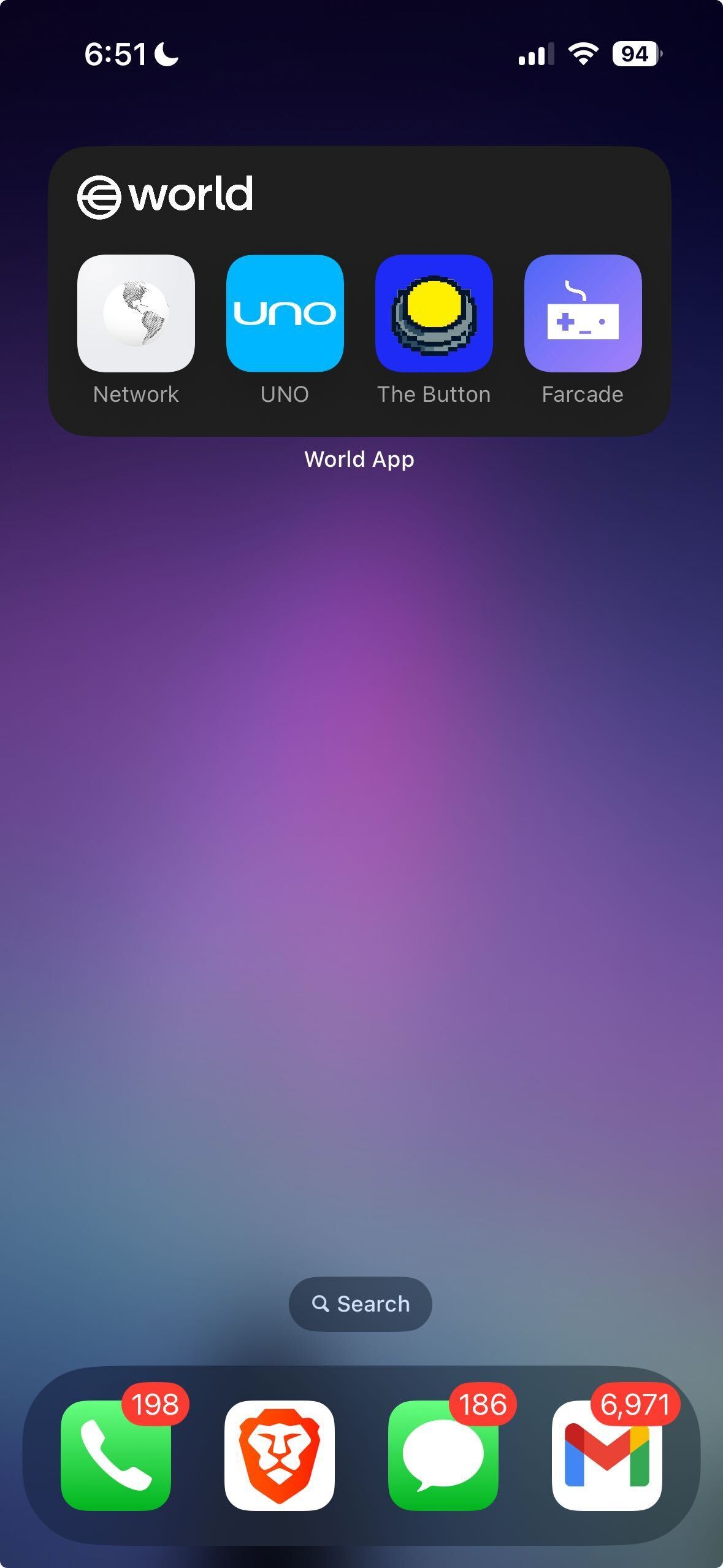
- Widget: Your mini app can live on the phone’s home screen. Prompt the user to add the mini app as a widget in the home screen.
Design Best Practices
Placement Strategy
- After first value delivery: When user completes their first meaningful action
- Post-achievement: Right after earning a badge, completing a level, or winning
- Onboarding finale: As the last step of user setup
Copy That Converts
- Personal benefit first: “Get 100 coins for each friend who joins”
- Mutual benefit: “You both get rewards when they sign up”
- Social proof: “Join 10,000+ users already earning rewards”
Visual Design
- Use prominent, action-oriented buttons (“Invite Friends”, “Share & Earn”)
- Show potential rewards clearly with icons or progress bars
- Include preview of what the shared content looks like
Metrics to Track
Monitor these key events to measure your viral loop performance:If you use the canonical Core Event Set,
invite_link_created maps to invite_sent and signup_source_invite maps to invite_accepted; invite_link_clicked has no equivalent there. Pick one taxonomy and use it consistently.Key Metrics Dashboard
- Invite Conversion Rate: (Signups from invites) / (Total invite links clicked)
- K-Factor: (New users from invites) / (Total active users)
- Viral Cycle Time: Average time from invite sent to new user activated
- Reward Cost per Acquisition: Total rewards paid / New users acquired
Quick A/B Test Ideas
Test these variables to optimize your viral loop:- Reward Amount: Test 50 vs 100 vs 200 coin rewards
- Timing: Share prompt after first win vs after onboarding
- Copy: Personal benefit vs mutual benefit messaging
- Incentive Type: Coins vs premium features vs exclusive content
Next Steps
- Implement universal links for your invite flow
- Add share buttons after key user achievements
- Set up two-sided rewards with World ID verification, self-referral, and idempotency checks
- Track invite metrics and run small A/B tests
- Scale successful invite mechanics across more touchpoints